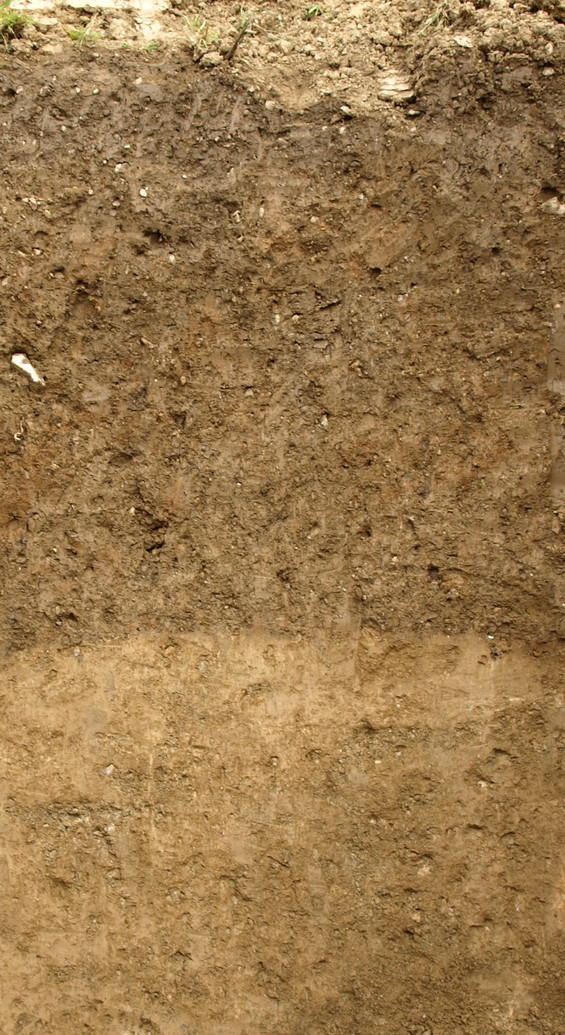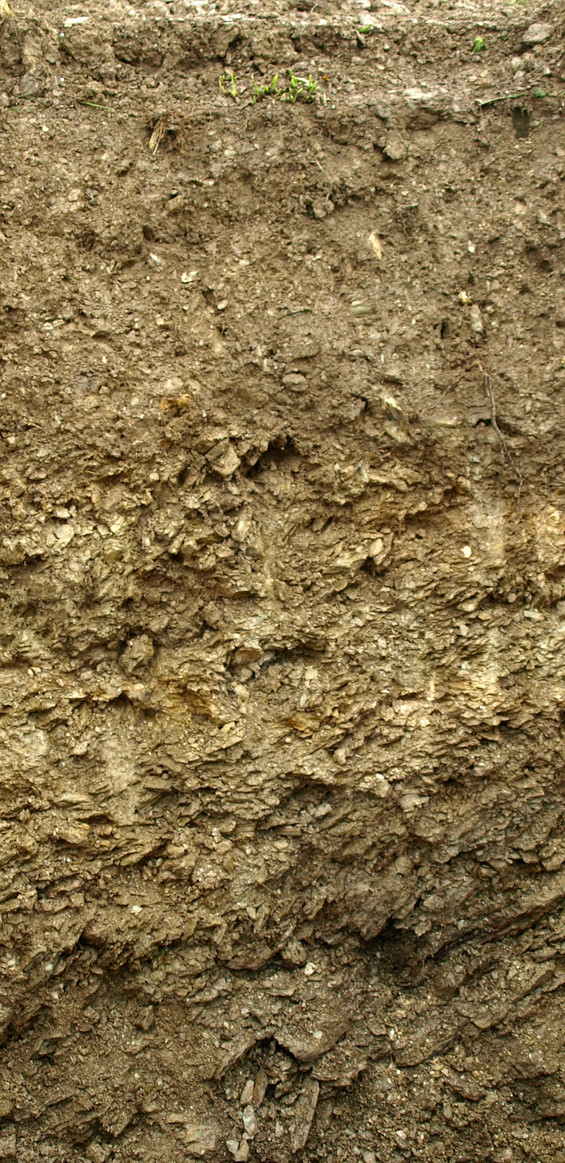


The Gräfenberg
Phyllite, Kiedrich, Kiedrich-River
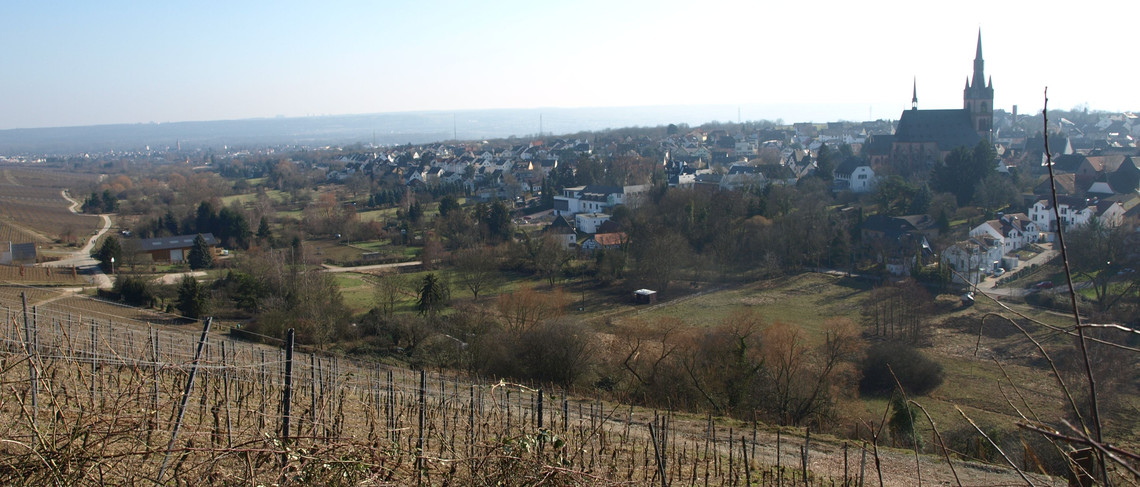
In the field-of-view of the stele you can follow the Wiesental valley to Eltville, where the Kiedrich River joins the Rhine. The mountain stream exits the Taunus Mountains in Kiedrich, where the valley widens and the landscape opens up. The Gräfenberg hill is a foothill of the Taunus Mountains and gradually descends towards the Mainz Basin. The sand found in the vineyard Sandgrub was deposited by the tertiary sea.
Gothic wine town
The history of the Gothic wine town Kiedrich is over 1000 years old. Wine-making is first officially recorded here in 1131. The Church of St. Valentine and St. Dionysius contains a number of historic treasures such as the Madonna of Kiedrich (around 1330) and the oldest working organ in Germany. Michaels Chapel was built between 1434 and 1444 as a funeral chapel with ossuary and is considered to be the most elaborate building of its kind from the late gothic period. Castle Scharfenstein was built around 1160 to protect the boundary of the Archbishopric of Mainz and the important trade road from Eltville via Hausen to Limburg.
From 1191 onwards the castle was the residence of the Blacks and Greens of Scharfenstein and later the Cratz von Scharfenstein.
The castle was abandoned during the 16th century.
Landscape along the edge of the Taunus Mountains
The folding of the mountain range and different extent of crustal block uplift exposed the oldest rocks in Europe at the south end of the Taunus Mountains: Phyllite, Muscovite Gneiss and green schist. These rocks form the distinctive foothills along a narrow belt preceding the ridge of the Taunus Mountain Range.
Phyllite Methusalem of the Rheingau rocks
About 470-485 million years ago, mud was deposited in the vicinity of a seacoast. These were transformed to phyllite under the enormous pressure of overlying rocks (Greek: Phyllos = leaf). The rock is mainly composed of muscovite, a laminated mica.
Loess is a calcareous wind-deposited sediment, which was formed during the ice age.
Soil determines the character of the wine
...say the experts and speak about terroir. Rieslings growing on non-calcareous, coarse soils are characterised by their minerality. Riesling wines produced on loess soils are usually described as fruity and mellow.
Coarse Phyllite soils on steep slopes are very dry sites. The vine is forced to budget its water supply. These soils produce wines with a noticeable minerality combined with fruity aromas and a fresh, zippy acidity.
Eroded soil is washed downhill and redeposited at the base where it forms humus-rich and fine colluvium. The soils formed on this material contain weathered loess, clay-rich weathered Phyllite, and rocks. Here the vine benefits from a rich supplied of water and nutrients.
These soils yield full-bodied and juicy Riesling wines with pronounced aromas.
Vineyard sites
The vineyard Gräfenberg (10 ha) belongs to the very few vineyards in the Rheingau that have been fully classified as a Premium Site. At the end of the 12th century the vineyard was known as the mons Rhingravii = Hill of the Count of the Rhine. The weathered loess soil contains coarse Phyllite debris and produces a full-bodied wine with differentiated fruity aromas.
The name Wasseros (27 ha) is known since 1393 and is indicative of the many springs found here.
The loess/weathered loess soils and thin rocky soils produce wines with a mineral acidity often combined with herbaceous aromas.
The vineyard Sandgrub (69 ha) is dominated by loess/weathered loess soils and local occurrences of gravel and sand beds. The acidity of these wines harmonizes well with the aromatic structure.