



A look behind the wall
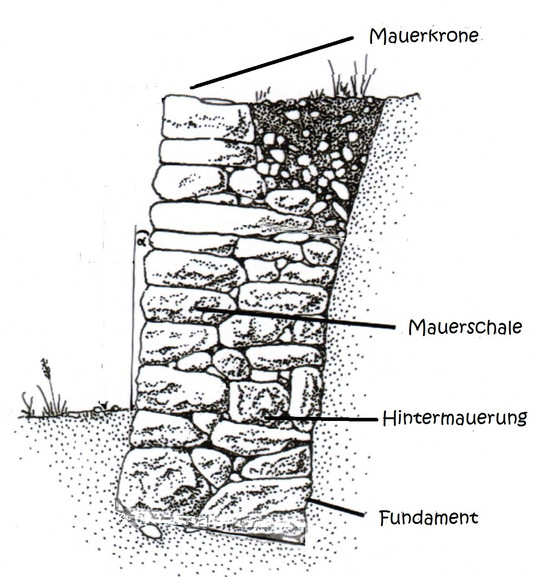
The space behind the vineyard wall has been backfilled with graded layers of rocks and soil, which function as both filter and as nutrient exchanger. Near the
The vineyard wall an engineering marvel
Vineyard terraces are complex structures. The first task a vineyard wall must fulfil is to retain the lower part of the backfill.
The wall is built inclined towards the slope and is arched like a water dam. This construction enables the wall to withstand the pressure of the soil.
The second and probably even more important function of the vineyard wall is drainage. The secret lies in the open joints between the stones. These provide channels for water to drain from the soil. Drainage is so slow that the soil will not dry completely. Thus the wall makes sure that the vines neither drown nor die of thirst. wall, the material is coarse, becoming finer further away from the wall.
The enemy of the wall is water
It does not take long for slate walls to show signs of weathering, which will eventually lead to the collapse of the structure. Shade and plants accelerate the weathering process of the slate. With time the gaps between the stones become clogged with fine earth, which reducing the walls capacity for draining water. The water saturated fine earth freezes in winter, causing the stones to work loose. Soon the wall loses stability and collapses. Today quartzite is the preferred rock used for walling. This rock is harder and more durable than the soft slate. The gaps between the rocks are filled with mortar and water is drained via pipes inserted into the quartzite wall.
Most steep locations can only be made available for producing wine by constructing retaining walls. Vineyard terracing reduces slope gradient. This slows down surface runoff and therefore reduces erosive soil loss. At the same time, terraces increase the amount of infiltration. The deep soils behind the wall provide good growing conditions. The walls also produce a positive side effect: a warm microclimate.
The dry stone wall biotope
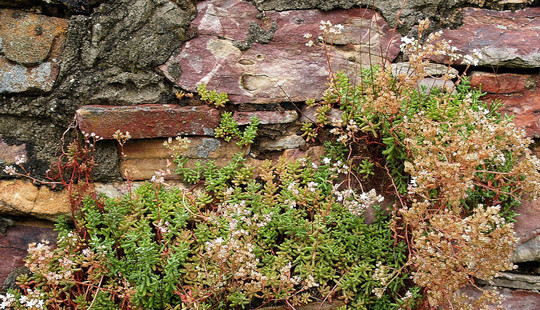
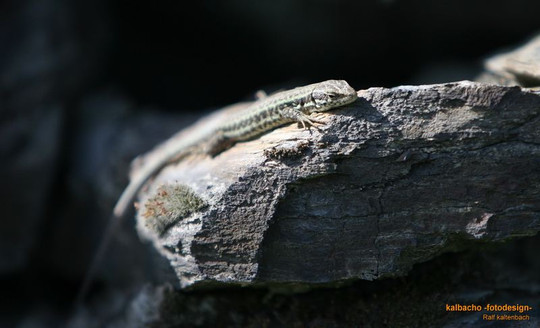
The interplay between the hot dry, recesses and crown of the walls and the deep moist soils in terraced vineyards offers a wide range of diverse, interconnected small-scale biotopes. This is a perfect habitat for a large variety of warmth-loving plants and animals such as various species of sedum (e.g. biting stonecrop), sand lizards, common wall lizard and slow worms.