

Alte Wege, alte Mauern
The legendary Kaufmannsweg
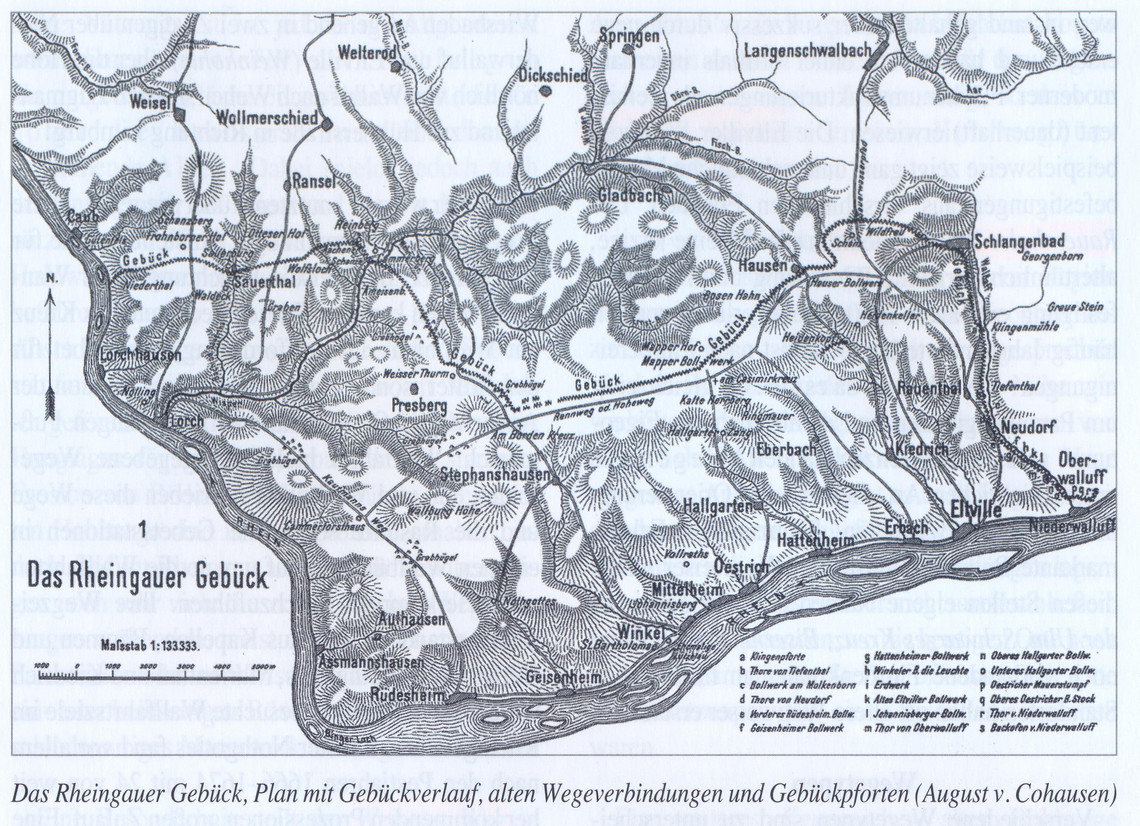
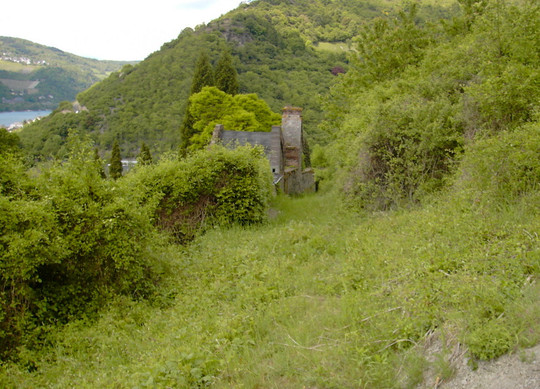
You are now on the footpath from Lorch to Rüdesheim, which is also known as the Kaufmannsweg (tradesmans way). The Kaufmannsweg begins in Lorch and leads to Rüdesheim and Geisenheim, a journey that entails two descents. The path is always shown on old maps and is often mentioned in the chronicles of the villages along the Rhine.
Over land or by river? Difficult or dangerous
Until medieval times, larger ships could not pass the notorious Binger Loch (shallow of Bingen). All goods had to be transported over the hills. However, the path was steep and arduous especially for transporting heavy goods. Back then, the crest of the Taunus Mountains and the Wisper valley were all but inaccessible. The haulers had to avoid jagged rocky places, inaccessible valleys and extremely steep climbs. The best route was along the relatively level hilltops.
A long time ago, the goods were transported on the Kaufmannsweg over the tops of the hills along the Rhine to Rüdesheim, where they were loaded back onto the boat. When the obstacle of the Binger Loch was cleared, the Rhine became a continuous waterway, navigable for cargo ships. Thus the importance of the Kaufmannsweg diminished during medieval times. The route was occasionally used for travelling by horse or transporting light goods on donkeys and other beasts of burden.
Preserving and modernising
Historical roads and paths are a part of our history and enrich our landscapes. These old paths often run between walls and are romantically overgrown with vegetation. A joint initiative initiated by the office of land consolidation, the town of Lorch and the forestry office at Rüdesheim, cleared the overgrown and derelict Kaufmannsweg and provided access to the path by building a footbridge.
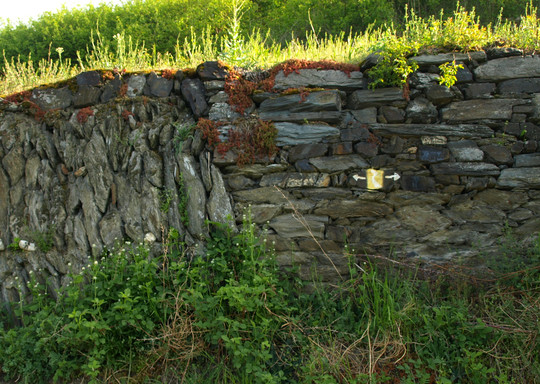
In Lorch, the old walls are built of slate. The construction of these vineyard retaining walls is very unusual: the crest of the wall is made of vertically placed slate. The newer walls are made of much harder Taunus Quartzite. In some cases gabions are used, where the rocks are filled into cages. This method no longer requires the skills of dry stone wall building.